
PenileRehabilitation
This can feel unexpected. In many cases, the focus during treatment is on recovery from the primary condition. Changes in sexual function may come up later.
Penile rehabilitation is about supporting recovery during this phase.
What Penile Rehabilitation Means
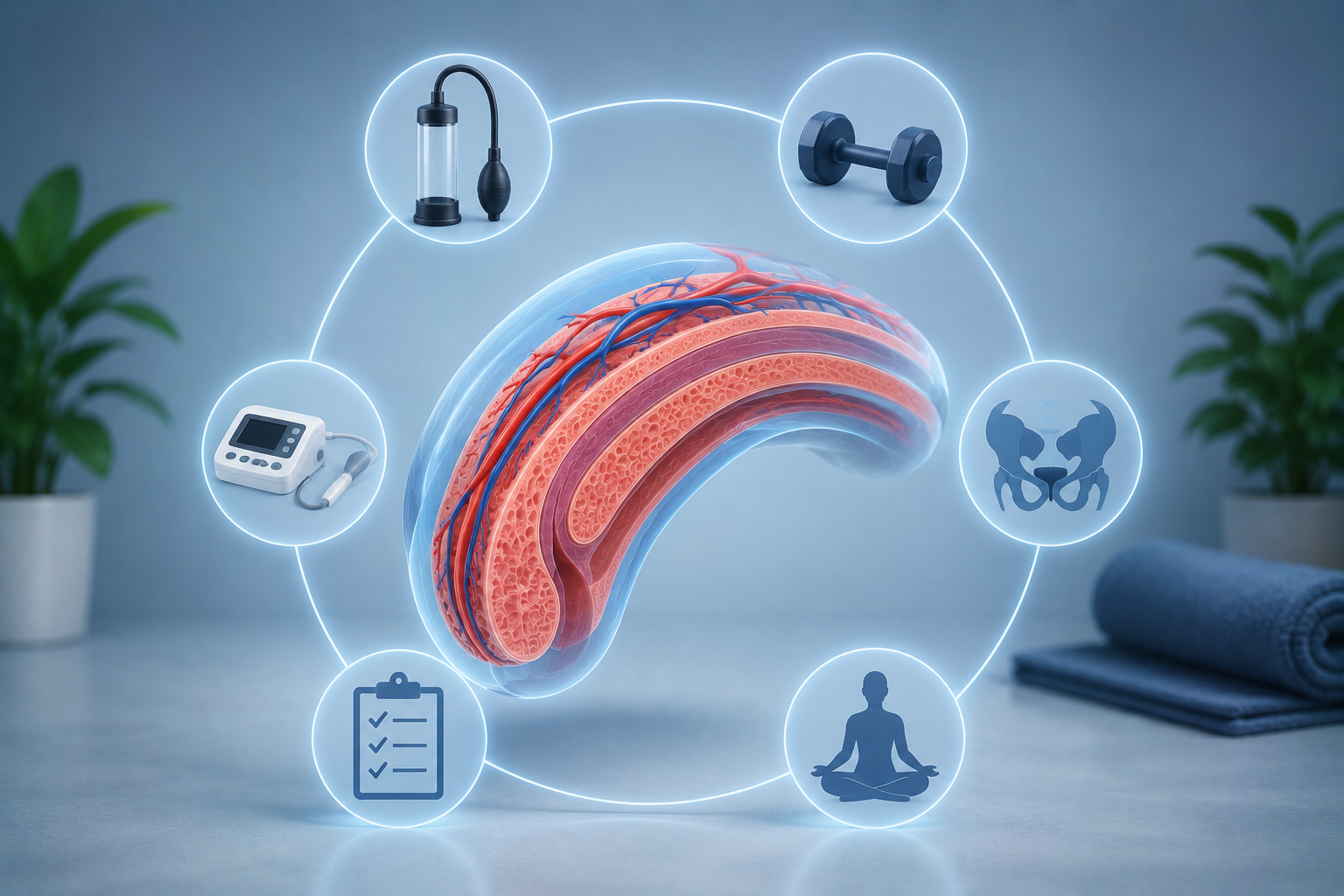
Penile rehabilitation is a structured approach to help restore erectile function. It focuses on maintaining blood flow and tissue health while the body recovers.
Erections depend on a combination of nerve signals and blood flow. When either of these is affected, the response may change. If this continues for a long period without support, the tissues may lose flexibility. This can make recovery more difficult.
Rehabilitation aims to prevent this — not by forcing recovery, but by creating a better environment for it.
Why Early Support Matters
Timing plays a role. After certain treatments, the body needs time to recover. Nerve function may take months to improve.
During this period, if there is no regular blood flow to the tissues, changes can occur. These changes are gradual, but they can affect long-term function.
Starting support early helps maintain the condition of the tissue. It does not force recovery, but it creates a better environment for it.
What Recovery Looks Like
Recovery is not immediate. It is usually gradual and varies from person to person.
Some men notice early changes. Others take longer. The process may involve periods where there is little change, followed by gradual improvement.
Expectations need to be realistic. The aim is not quick results, but steady progress over time.
How Penile Rehabilitation Is Done
The approach depends on the individual situation. In many cases, medication is used to support blood flow. These medications do not always create a full erection on their own, especially in the early phase — their role is to improve circulation.
- Medication to support blood flow
- Devices to draw blood into the penis and maintain tissue health
- Other methods considered depending on individual response
The plan is usually adjusted over time based on how the body responds.
The Role of Consistency
One of the key parts of rehabilitation is consistency. Occasional effort does not have the same effect as regular support. The body responds to repeated signals over time.
This does not mean constant effort, but a steady routine. Small, consistent steps tend to give better results than irregular attempts.
The Connection to Overall Health
General health also plays a role in recovery. Conditions such as diabetes, high blood pressure, and lifestyle habits can affect blood flow and nerve function.
- Sleep quality and duration
- Regular physical activity
- Stress levels and mental well-being
- Management of chronic conditions such as diabetes and high blood pressure
Looking at these factors helps support the overall process.
The Emotional Side
Changes in sexual function can affect confidence. Many men do not talk about this openly. There may be concern about performance, or hesitation around intimacy.
This is a normal response. Understanding that recovery takes time can reduce some of this pressure. Open communication with a partner also helps.
Book an Appointment
Speak with a specialist at our Chennai clinic. All enquiries are handled with complete discretion and professionalism.
When Should Rehabilitation Begin?
In many cases, it is best to begin early. This does not mean immediate treatment after a procedure, but starting at the right time as advised.
Delaying support may reduce the chances of optimal recovery. At the same time, the approach should be guided — starting without a plan may not give the intended results.
How Progress Is Assessed
Progress is usually tracked over time. Changes in response, frequency of erections, and overall comfort are considered. In some cases, adjustments are made based on how the body responds.
The process is not fixed. It evolves based on individual response.
Does Everyone Need Penile Rehabilitation?
Not always. Some men recover function naturally without structured support. Others may benefit from guidance. The need depends on the type of treatment, the extent of change, and overall health.
Evaluation helps decide whether rehabilitation is needed.
What Affects the Outcome
Several factors influence recovery:
- Age and general health
- Type of treatment received
- Baseline erectile function before treatment
- How early support was started
- Consistency with the rehabilitation plan
No two cases follow the same path. Understanding this helps set realistic expectations.
A Simple Way to Look at It
Penile rehabilitation is about supporting recovery, not forcing it. It helps maintain the conditions needed for function to return over time.
The process is gradual, but in many cases, it leads to improvement.
The key is to begin at the right time, stay consistent, and understand that progress takes time.
FAQ's
Common Questions About Penile Rehabilitation
Clear answers, expert guidance, and a safe space to understand concerns related to sexual health, fertility, hormones, and urology.
1. What is penile rehabilitation?
Penile rehabilitation is a structured recovery plan designed to restore blood flow and maintain penile tissue health, usually after prostate surgery or erectile dysfunction. The goal is to support natural recovery over time.
2. Why is penile rehabilitation important after surgery?
After procedures like prostate surgery, the nerves controlling erections may take time to recover. During this period, reduced blood flow can affect tissue health. Rehabilitation helps preserve function and improves long-term outcomes.
3. When should penile rehabilitation be started?
Penile rehabilitation is usually started early, often within a few weeks after surgery, depending on recovery and medical advice. Early intervention generally leads to better results.
4. What treatments are used in penile rehabilitation?
Penile rehabilitation may include low-dose medications, vacuum erection devices, pelvic floor (Kegel) exercises, and sometimes other supportive therapies. The plan is tailored to each individual.
5. How long does penile rehabilitation take?
Recovery varies from person to person. It may take several months to over a year for nerve healing and functional improvement. Consistency with the plan is key.
6. Does penile rehabilitation guarantee full recovery?
While outcomes vary, early and consistent rehabilitation significantly improves the chances of recovery. The focus is on maintaining tissue health and supporting the body’s natural healing process.