
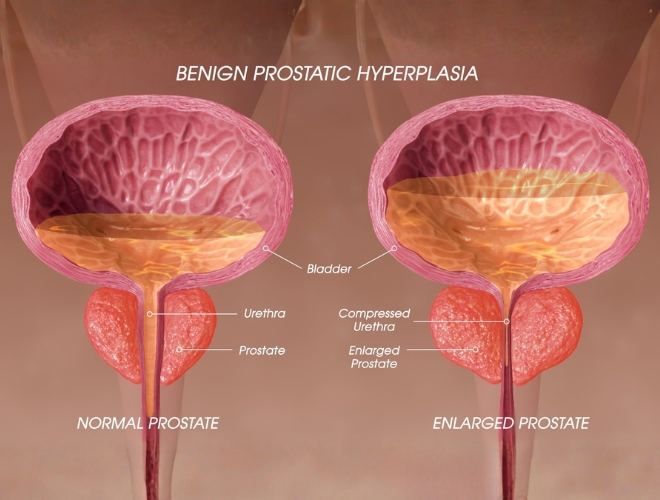
Benign prostatic hyperplasia, often called BPH, is an increase in the size of the prostate gland.
The prostate sits just below the bladder and surrounds the urethra, the tube that carries urine out of the body. As the prostate grows, it can press on this tube and affect how urine flows.
“Benign” means it is not cancer.
This is an important point. BPH is a common, non-cancerous condition that many men develop as they get older.
Some men have an enlarged prostate without any symptoms. Others begin to notice changes in urination over time.
Service Details
The exact reason is not always clear, but age and hormonal changes play a role.
As men get older, the balance of hormones in the body changes. These changes can influence how prostate cells grow.
This growth is usually slow. It may take years before any symptoms appear.
Not every man develops symptoms, even if the prostate is enlarged.
The symptoms are mostly related to urination.
Some men notice that the urine stream becomes weaker. It may take longer to start, or there may be a need to strain.
There may be a feeling that the bladder is not empty after passing urine.
Another common change is frequency. There may be a need to pass urine more often, especially at night.
Urgency can also develop. The need to urinate may come suddenly, with less time to wait.
These changes often begin slowly. Because of that, many men adjust to them and delay getting checked.
Mild symptoms are common and may not need treatment.
But when they begin to affect daily life or sleep, it is worth paying attention.
Frequent waking at night can affect rest. A constant need to find a restroom can affect routine.
In some cases, the bladder may not empty properly, which can lead to further problems over time.
The aim is not to create concern, but to recognise when symptoms are persistent.
No.
BPH is not cancer, and it does not turn into cancer.
However, both conditions can affect the prostate, and some symptoms may overlap.
That is why proper evaluation is important.
A check helps understand what is causing the symptoms and whether anything needs attention.
How is BPH evaluated?
Evaluation usually begins with a discussion of symptoms.
The doctor may ask about urine flow, frequency, and any recent changes.
A physical examination may be done, including a digital rectal exam to assess the prostate.
A urine test may be used to rule out infection.
A blood test called PSA (prostate-specific antigen) may also be done. This helps assess prostate activity, but it is not a diagnosis on its own.
In some cases, scans or other tests may be advised to understand the situation better.
Does every case need treatment?
No.
If symptoms are mild and not affecting daily life, observation may be enough.
Many men live with mild BPH without needing treatment.
Treatment is considered when symptoms become bothersome or start to affect quality of life.
The decision is based on how the person feels, not just on test results.
What can be done to manage BPH?
For mild symptoms, simple changes can help.
Reducing fluid intake in the evening may reduce night-time urination. Limiting caffeine and alcohol can also help in some cases.
If symptoms are more noticeable, medication may be used.
Some medicines help relax the muscles around the prostate and bladder, making it easier to pass urine. Others work to reduce the size of the prostate over time.
If symptoms are more severe or do not respond to medication, procedures may be considered.
These procedures aim to remove or reduce the part of the prostate that is causing blockage.
Most are done with minimally invasive techniques.
Can BPH be prevented?
There is no clear way to prevent prostate enlargement.
But general health habits can support overall function.
Maintaining a healthy weight, staying active, and managing chronic conditions may help.
Regular check-ups also allow early identification of changes.
When should you see a doctor?
It is worth getting checked if you notice persistent changes in urination.
If sleep is disturbed due to frequent urination, or if there is discomfort, it should be evaluated.
Any sudden change, pain, or blood in urine should not be ignored.
Even if symptoms are mild, getting clarity can help.
A simple way to look at it
BPH is a common part of ageing in many men.
In most cases, it is manageable.
The important part is to recognise changes and understand when they need attention.
A simple evaluation can help separate normal changes from those that need treatment.
FAQ's
Frequently Asked Questions
1. What is BPH and how does it affect men?
‘BPH prostate’ refers to a non-cancerous enlargement of the prostate gland. It is a common condition as men age and can affect urine flow by pressing on the urinary passage.
2. What are the common BPH symptoms?
Common BPH symptoms, or enlarged prostate symptoms, include frequent urination, a weak urine stream, difficulty starting urination, urgency, and waking up at night to pass urine.
3. What are the causes of BPH?
BPH causes are mainly related to age and hormonal changes in men. Lifestyle factors and overall health can also influence the severity of symptoms.
4. What are the options for BPH treatment?
BPH treatment depends on how severe the symptoms are. It may include lifestyle changes, BPH medical treatment, or medications that help relax the prostate and improve urine flow.
5. What medicines are used for BPH treatment?
BPH treatment medicine includes drugs that reduce prostate size or relax the muscles around it. These are commonly used in early to moderate stages of the condition.
6. When is surgery needed for BPH?
BPH surgery is usually considered when symptoms are severe or not responding to medication. Surgical options help relieve obstruction and improve quality of life.