
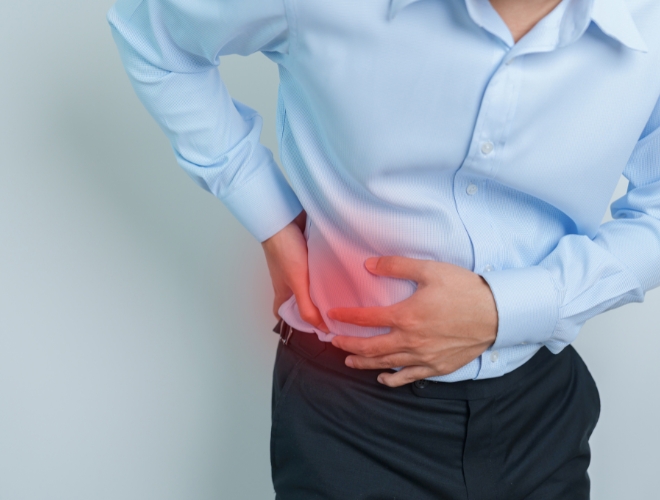
When pain starts suddenly
Kidney stones often come to attention because of pain.
It is not the kind of pain that builds slowly. It can start without much warning. One moment things feel normal, and the next there is a sharp discomfort in the back or side.
For many, this is the first sign.
The pain may come in waves. It may ease for a while and then return. It can move from the back toward the lower abdomen or groin as the stone shifts.
This kind of pain is hard to ignore. But the stone itself often forms quietly, long before any symptoms appear.
Service Details
Kidney stones are hard deposits that form from minerals in the urine.
Urine normally carries dissolved substances. When the balance changes, some of these substances can come together and form crystals.
Over time, these crystals can grow into small stones.
Some remain in the kidney without causing problems. Others move into the ureter, the tube that connects the kidney to the bladder.
It is this movement that usually causes pain.
There is no single cause.
In many cases, it comes down to how concentrated the urine is. When fluid intake is low, urine becomes more concentrated, which makes it easier for crystals to form.
Diet can also play a role.
Certain foods may increase the level of substances that contribute to stone formation.
Some people have a natural tendency to form stones. Others may develop them due to medical conditions that affect how the body handles minerals.
Past history also matters. Once a person forms a stone, the chance of forming another can be higher.
Pain is the most common symptom.
It is often felt on one side of the back, just below the ribs. As the stone moves, the pain may shift toward the front or down toward the groin.
The intensity can vary, but it is often described as severe.
There may also be nausea or vomiting.
Some men notice changes in urination. There may be a need to pass urine more often, or a sense of discomfort while doing so.
In some cases, there may be blood in the urine. It may not always be visible, but it can be detected on testing.
Not every stone causes symptoms. Small stones may pass without being noticed.
Pain that is severe or persistent needs attention.
If there is fever along with pain, it should be checked without delay. This may suggest an infection along with the stone.
Difficulty in passing urine or a complete blockage is also a concern.
Blood in urine should not be ignored, even if there is no pain.
These signs do not always mean a complicated problem, but they need evaluation.
Diagnosis usually starts with the symptoms.
Based on the pattern of pain and other changes, a stone may be suspected.
Imaging tests are used to confirm it.
Ultrasound is commonly used as a first step. In some cases, a CT scan may be advised to get a clearer picture.
These tests help identify the size, location, and number of stones.
They also help in deciding what needs to be done next.
Do all stones need treatment?
No.
Many small stones pass on their own.
The body is often able to push the stone through the urinary tract, though this can take time and may cause discomfort.
Pain relief and adequate fluid intake are usually advised during this phase.
Larger stones, or those that do not move, may need treatment.
The decision depends on size, location, and symptoms.
What are the treatment options?
Treatment is based on the situation.
For smaller stones, the focus is on helping the body pass them naturally.
If the stone is larger or causing significant symptoms, procedures may be needed.
Some methods use sound waves to break the stone into smaller pieces so it can pass more easily.
In other cases, a small instrument may be used to remove or break the stone directly.
Most procedures are minimally invasive and focused on relieving symptoms and clearing the blockage.
Why prevention matters
One of the important parts of managing kidney stones is preventing them from coming back.
Once a person forms a stone, the chance of recurrence is higher.
Fluid intake plays a key role. Keeping urine diluted reduces the chance of crystal formation.
Dietary adjustments may also be advised, depending on the type of stone.
In some cases, further tests are done to understand why stones are forming.
Prevention is often simpler than treatment.
The link to daily habits
Daily habits have a strong influence on stone formation.
Low fluid intake is one of the most common factors.
Irregular eating patterns and certain dietary habits can also contribute.
Long periods without hydration, especially in hot climates, increase the risk.
These are small factors, but they add up over time.
When should you see a doctor?
It is worth getting checked if there is severe pain, repeated episodes of discomfort, or any change in urination.
Blood in urine, fever, or difficulty passing urine should not be ignored.
Even after a stone has passed, follow-up may help in preventing recurrence.
A simple way to look at it
Kidney stones often begin silently.
They become noticeable only when they move.
Most cases are manageable, and many stones pass without major intervention.
The important part is understanding why they formed and how to reduce the chance of it happening again.
FAQ's
Frequently AskedQuestions
1. What are the first signs of kidney stones?
Kidney stone symptoms may start with mild discomfort, burning during urination, or occasional lower back pain. As the stone moves, kidney stone pain can become severe and may radiate to the abdomen or groin.
2. What causes kidney stones and why do they form?
Kidney stones form when minerals in urine crystallise due to low water intake, high salt diet, excess protein, or metabolic factors. Understanding what causes kidney stones helps in preventing recurrence.
3. How to know if you have kidney stones?
If you experience sharp pain, blood in urine, or difficulty urinating, it’s important to get evaluated. Tests like ultrasound or scans help detect kidney stones accurately.
4. How to pass a kidney stone fast or stop the pain?
Small stones may pass naturally with hydration and medication. To manage pain, medical guidance is important rather than trying home remedies alone. Severe kidney stone pain should not be ignored.
5.What are the options for kidney stone treatment?
Kidney stone treatment depends on the size and location of the stone. Options include medication, non-invasive procedures, or kidney stone removal when needed. For those seeking kidney stone treatment in Chennai, early consultation helps avoid complications.
6. How to prevent kidney stones or avoid recurrence?
To prevent kidney stones, maintain good hydration, reduce salt intake, and follow a balanced diet. Recurrent kidney stone treatment often involves identifying and correcting the underlying cause.